READ@PEACE

Books, Lit Fests, News, Movies, Art, Fashion and TV of course... "I must say that I find television very educational. The minute somebody turns it on, I go to the library and read a book." - GROUCHO MARX

My Photo
Name:

I'd write more, like you said I should. If only, there was more to me.

Friday, January 26, 2007

REFLECTIONS FROM GALLE

The past one week has been a mad, mad rush. I'm still trying to sit back and put everything I heard, saw and learnt at the Galle Lit Fest on the blog - there was a lot that happened. A couple of pieces are out, but there's lots more to go. For a start here goes. This one appeared in the newspaper 'Today':
http://www.todayonline.com/articles/167828.asp

If the link doesn't work, here's the full text:
61 writers, over 50 events, 12 stunning settings.

That might not sound like anything unusual for a literary festival -- unless, of course, you're in Sri Lanka.

For far too long, 'Sri Lanka' and 'violence' have been used almost inter-changeably. That's why the prospect of an untested festival drawing famous authors has created such a buzz among the literary fraternity.

William Darlymple, Suketu Mehta, Mark Tully, as well as spice queen Madhur Jaffrey were among the slew of well-known literary names who attended. Sri Lankan authors were there in full force too. But the biggest draw, without a doubt was last year's Man Booker Prize winner Kiran Desai.

She was clearly the literary equivalent of a rock star, without the airs. Having exchanged two brief emails, I tried pulling her over for a quick chat before our 90 minute session, but were overtaken by a crowd of avid readers. It was quite an experience to watch her with them. If there was one word to be sum it up, it would be 'genuine'. When I point that out, she responds matter of factly "after all they give us our stories." Despite her splendid work and rapidly growing list of literary awards - Betty Trask, Man Booker - Kiran just like her mother, the celebrated Anita Desai, remains remarkably modest.

After our session, there's a bit of time left for this interview. She floors me from the outset -- the way she casually shrugs off her prizes as incidental. She dwells instead on her longing to write again, "I think prizes just don't go with good writing. Writing comes from a very private and often difficult place and I think it takes isolation to get there."

I've had always wondered about the seven year gap between her debut 'Hullabaloo in the Guava Orchard' and the award-winning second book - 'The Inheritance of Loss'. And finally got my answer. Kiran says the lag was partly because publishers weren't beating down her door with huge advances for a next book.

And, it was a challenge book to write. "It's a difficult book about a difficult subject. I just didn't want to write a book that looked at immigration like a shiny way of advertising that shows that everything in the West is alright. It may be a beautiful picture for some immigrants, but it isn't for so many others and for these people there is perhaps a greater degree of loss. It was a tough book and it was hard for me to get it published and I was quite amazed to see this turn around from rejection to recognition."

The book is set in North-Eastern India's Kalimpong, taking Kiran back to some of the characters and places of her childhood. "As a writer, it's such a joy to go back to a place that offers such richness and to use language in a totally different way."

Speaking of writing, Kiran is also quick to express her debt of gratitude to her mother. "It's been a very deep experience to be able to write this book in her presence and she's written so many books about so many hard subjects."

With that we move on to, what else, but the next book. When asked about her greatest fear as a writer, she points out "it's worrying about the next subject for the next book. I never know in advance what I'm going to be doing. It's a process of sitting at my desk and a book is revealed gradually, so there's always the worry that there's going to be nothing else there but I do long for the sitting at my desk."

And she hopes to do that this summer, once the publicity over her recent win settles. That's good news for the growing legion of Kiran Desai fans anxiously waiting for the next big one.

Wednesday, January 31, 2007

POST FEST MUSINGS....


The fun, they say, usually begins after the festival. In this case it was the smiles. Founder of the Galle Literary Festival, Geoffrey Dobbs (behind Kiran) had reason to be happy. Together with Libby Southwell (who even at this point in time was sorting out someone's transport!) had pulled it off in a record time of four months. The critics had finally been silenced. The writers seemed happy as did the audience. It was a festival that had taken inspiration from Ubud - the Fest Director Janet de Neefe is here and also got lots of advice from the Founder of the Hong Kong Lit Fest Nury Vittachi.

Well, inspiration is one thing, bringing it to life quite another. And the writers did a fine job of that. Collectively, Kiran Desai, Suketu Mehta and Romesh Gunesekera shone at their respective sessions. They also ended up taking the discussions at the last panel 'An Englishman Abroad' to another level. A lot of fun ensued here.

Sir Arthur C Clarke couldn't hear half the things that were said, perhaps that drove him to poetry and tales from another galaxy. Mark Tully and William Darlymple happily agreed to disagree - who doesn't love a writerly disagreement?

As part of the conversation William D also announced Suketu's book on New York and dragged both Kiran and Suketu into the 'Insider, Outsider' debate. Smart way to stretch the debate I say. Thoughts were shared on their stories, their writing, their styles, though in the end it was Romesh who stole the thunder by posing the profound question 'Is there a South Asia in London?' I hear the issue is still being debated.

Also on the sidelines, I was mistaken for Kiran Desai twice.
Once before our session, when two lovely ladies walked upto me with their pens and said "Are you signing books now?"
Since I haven't written any books, award-winning or otherwise, I replied, "You know I'd love to do just that if only Kiran would part with half of her Booker.""Oh my God! You are NOT Kiran?"
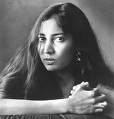
Then they flip to the last page and show me the picture I've seen so many times before and went: "Gosh, you look just like her."

I didn't have the heart to disagree, though to set the record straight, Kiran is whole lot slimmer, taller, nicer. I'm a grouch most mornings. More importantly, she has written theee book, I haven't.

Just when I thought the case of crossed identities was over, the next morning as I am rushing to set up my camera for the last session, a gentleman walks upto me and proclaims with the utmost seriousness of purpose:
"I don't mean this as a criticism of you but it's not fair that your session drew over 300 people."
A happy problem indeed!

So I tell him he'd do well to say that to that lovely lady in brown sitting quietly in one of the seats there.

"You mean...."

Labels: , ,

Friday, October 05, 2007

BOOKING KIRAN DESAI

Time flies as it's meant to.

Gosh, it's been three years on the lit fest circuit, three years of work that has gone into the making of Off The Shelf. Three years of dealing with authors of varied sensibilities, propensities and manner.

Some are propah, others like to shock - for reasons literary and otherwise. Some are engaging minds, others focused on selling their book and getting over and done with you. Some give you thoughts to last you a lifetime, others are gone as swiftly as the 10 minutes of air time. Yet each of them leaves you with a lesson. Depending on their disposition it can range from one in haughtiness to one in modesty.

Yes, it's been a journey that will never have another parallel. Over the weeks, months and years, some authors have felt like family, others have become family and
some have made a special place in my heart.

Kiran Desai is one of them. I met her for the first time at the Galle Literary Festival in January this year and it was an immediate connect. In an earlier post, I'd mentioned meeting her was "almost like bumping into an old friend." And it felt the same way in Ubud.

Untouched, unspoilt by her success, she seemed slimmer, at times a little exhausted, yet she never skipped a beat when it came to meeting people who wanted to know about her or about her work. Between sessions, you'd see her gamely posing for photographs at Indus, granting interviews to pretty much whoever came along - and lots of people did.

We managed to sneak in a dinner at the Cafe de Artistes after the Amandari Cocktail evening and indulge in some surreal conversation at Blanco and it sure felt like time stood still for just that little bit.

Kiran will be appearing at the Galle Literary Festival next year together with her mother Anita Desai. I don't know about you, I just can't wait....


Kiran has spoken of the "debt of gratitude" she owes to her mother. Both mother and daughter have enormous respect for each other's work and it shows. I've unfortunately missed out on the whole mother-daughter relationship and when I took a closer look at this shot, I couldn't help but wonder what things would be like, when Aneesha grows up. Who knows.....


Apologies for the darkened shots. This was the best I could get on my camera phone in the Amandari lighting. Lots was said in this session with Shashi Tharoor. More on it later. If you have better pix, replacing these is no issue.

Labels: ,

Friday, January 26, 2007

ONE ON ONE WITH KIRAN DESAI


This one couldn't make it to the papers thanks to its sheer size. Here's where our blogs come in. I am going to make no bones about it. Kiran is an absolute delight to be with, a dream author to interview, this is what we chatted about after our hour and a half long session followed by a loooong book signing by Kiran. It was worth every moment of her time and I am truly appreciative of it. Yes, some day, I shall attempt to transcribe the session too, since the audio isn't fantastic. In the interim, enjoy this....

Meeting award-winning author Kiran Desai is almost like bumping into an old friend. I was to do a one-on-one with her at the inaugural Galle Literary Festival in Sri Lanka and apart from two brief email exchanges we hadn't found time to chat. I finally bumped into her at a book reading at the Sun House and was struck by how slim she is in person. In fact, she could easily pass off as a school girl. We speak about that before attempting to get down to what we should really have started off with - our session.

It's hard to get to that because the Man-Booker-win had transformed Kiran into the literary equivalent of a rock star at Galle. Fans wanted a quick word, some wanted to discuss the book, others wanted to get it signed. Being the wonderful person she is, she obliged everyone along the way. She isn't one of those authors, who just asks your name, scribbles it on the page and hands the book back to you. Her interest in her reader is genuine, 'after all they give us our stories' she points out matter-of-factly. Having met her mother at the Ubud Writers Festival, it's easy to draw parallels and say like mother, like daughter. Despite her splendid work and rapidly growing list of literary awards – Betty Trask, Man Booker - Kiran has inherited her mother's modesty. She considers prizes incidental. She throws me off by speaking of her struggle to write and when asked about the seven year gap between her debut 'Hullabaloo in the Guava Orchard' and the award-winning 'The Inheritance of Loss', she simply points out that publishers weren't exactly rushing to her with huge advances for the next book. Instead of dwelling on the Man Booker laurel, she chooses to highlight the struggle of getting her book out. She talks with ease, delivering her thoughts in a lilting convent-school accent. Despite her informality, she has a certain presence that makes her captivating -- a quality that's translated in her writings and has won the hearts of many a fan.

Excerpts from a conversation with the youngest female recipient of the prestigious Man Booker Award:

Q : We've seen the backdrop of partition, post 1985 Punjab but the issues of North-Eastern India have remained largely unexplored. What drew you to them in your award-winning book 'The Inheritance of Loss'?
A : I was surprised I went back to the North-East and made this return journey to a part of India where I partly grew up in and I think its because I was an immigrant to America that I started thinking so much about issues of immigrants - the issues of politics, what it means to leave a poor part of the world and go to a so-called wealthier one. Beyond the monetary issues what does it mean in human terms. Also when you look at it so many generations on, what does it feeling at home in any other country mean. Of course, its a debate that exists all over the world. We tend to think of it as a Western issue but it isn't. I realised that I'd never really thought about that period of my life when I'd been growing up in India at the time of the conflict in the North-East. It was the Gurkha movement when Nepalese Indians were standing up and demanding political and economic rights. They found that several generations on they were being treated as cheap labour and that their rights were not being respected. So I wanted to explore what does it mean for a country and a nation-state. So it was a way for me to examine both these issues together. It took me back to India, it took me back to Kalimpong, which was wonderful because it took me back to a time when I was growing up. Among other things, it helped me explore what it means to grow up in such a complicated, complex environment.

Q : What was it like to capture all the nuances of a life gone by? You do it so beautifully, from the description of the setting right down to the chocolate cigars which were and hopefully still are a Kalimpong trademark.
A : You know it's such a beautiful part of the country, really wild and beautiful and also complicated in many ways. As a writer, it's such a joy to go back to a place that offers such richness and to use language in a totally different way. I was glad to return to those childhood memories, remembering and recreating some of the characters I knew from my childhood. It was a wonderful experience.

Q : Reactions to your book have been totally amazing, the Man Booker Award is a testament to that. Did you ever imagine the kind of response you've received?
A : Not at all. It's a difficult book about a difficult subject. I just didn't want to write a book that looked at immigration like a shiny way of advertising that shows that everything in the West is alright. It may be a beautiful picture for some immigrants, but it isn't for so many others and for these people there is perhaps a greater degree of loss. There is this huge imbalance between the rich and the poor, privileged and the under-privileged, the class divides are there and I was exploring these issues in India and in the west. So it was a tough book and it was hard for me to get it published. In fact, after several tries it got picked up by Hamish Hamilton in the UK. The process of writing it, finding a publisher for it was hard work and I was quite amazed to see this turn around from rejection to recognition.

Q : You've often acknowledged the debt of gratitude you owe to your mother, Anita Desai. How much of an influence has she been when it comes to writing?
A : So much. I mean not only in terms of what it means to be a writer. It's been a very deep experience to be able to write this book in her presence and she's written so many books about so many hard subjects, she has looked at so many difficult issues and dealt with them so beautifully in her writing. I really learnt so much from that.

Q : Kiran, readers waited seven long years for 'The Inheritance of Loss'. You've won the Man Booker now and I am sure the pressure of the next novel must be intense. Are you already at work on it?
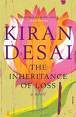
A : Not yet. I'm just travelling, doing book tours, promotional events, literary festivals and it looks like that's going to be my life for several months ahead. I really long to write. I think prizes just don't go with good writing, that doesn't really help. Writing comes from a very private and often difficult place and I think it takes isolation to get there, I'm looking forward to resuming my writing, maybe this summer.

Q : So once the dust settles, you are pretty certain you want the solitary confinement of a writer?
A : It's hard to live a lonely life. It's certainly difficult, but I need it for my work. I know its difficult but I do love it in many ways and I have learnt to appreciate it.

Q : Noted travel writer Paul Theroux once said that his biggest fear is not running out of ideas but writing a dull book. What's your greatest fear as a writer?
A : Worrying about the next subject for the next book. I never know in advance what I'm going to be doing. It's a process of sitting at my desk and a book is revealed gradually, so there's always the worry that there's going to be nothing else there but I do long for the sitting at my desk.

Tuesday, October 10, 2006

AND THE BOOKER GOES TO.....


It's the moment we've all been waiting for. After the initial disappointment of seeing Claire Messud and David Mitchell being dumped, I was busy rooting for Hisham Matar and Kiran Desai.

It had to be down to the wire, both awesome books in their own right, tugging at your heartstrings with the multitude of issues they address.

I met Kiran's mother, the celebrated novelist Anita Desai and was fortunate to moderate a panel on 'Writing Across Time, Place and Identity' that featured her together with Meira Chand and Shalini Akhil at the Ubud Readers' and Writers' Festival. In fact, before the discussion, we talked about Kiran and how Anita has inspired a whole generation of writers and the fact that the teaching started right at home. Anita gave her usual kind smile and told me in her gentle whisper "I can't take credit for that." We talked about novel making and what a moment it would be if Kiran won the prestigious Booker.

The moment is here and even as I write this I can visualise Anita Desai's warm smile lighting up my space. It keeps Indian writing firmly in the spotlight and calls for more than just another celebration.

So if you haven't already read the book, there will never be a better moment to find out all about 'The Inheritance of Loss'.

If you are still thinking about it, read Sharon's brilliant prose on the book here:
http://thebookaholic.blogspot.com/2006/10/inheriting-loss.html

KIRAN DESAI'S INHERITANCE


I haven't met Kiran, but having spent some memorable and precious moments that will last a lifetime with her mother, I can say if there is one thing that both of them share it has to be modesty. Apart from their fine writing abilities, of course.

Accepting the Man Booker Prize, Kiran spoke about her mother, to whom she said she owes "a debt so profound and so great that this book feels as much hers as it does mine....It was written in her company and in her witness and in her kindness. I really owe her this book so enormously, there isn't enough to convey it."

Interestingly, mother and daughter share the same house. Kiran works upstairs, Anita downstairs. Its something we talked about in our panel discussion in Ubud. The grand dame of literature told us how they both cross paths but never step into each others writing domains. As Anita pointed out "it's a very good arrangement."

And one that is definitely bearing fruits. Kiran's first novel, 'Hullabaloo in the Guava Orchard', won a Betty Trask award in 1999. Now, she will be toast of the literary bunch. After all she has beaten five other authors including favourite Sarah Waters and her book 'The Night Watch', for the 50,000-pound award. In doing so, she has become the youngest ever female winner of the award and has bettered the record of her mother, who was nominated thrice for the award, most recently in 1999, but failed to win.

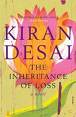
'The Inheritance of Loss' tells parallel stories based in post-colonial India and the United States. A Cambridge-educated Indian judge is living out a reclusive retirement in the foothills of the Himalayas, until his orphaned teenage grand-daughter comes to stay with him. His existence eventually comes under threat from Nepalese insurgents. At the same time, his cook's son, who has moved to the US to seek his fortune and ends up an illegal immigrant in the restaurant kitchens of New York.

Kiran herself has lived through several experiences. She grew up in India and moved to Britain when she was 15. Her prize-winning book took almost eight years to complete. She wrote "half stories, quarter stories" and picked the novel out of it.

Of the whole process of writing the book, Kiran says "it was quite a difficult, emotional experience for me." Though it these emotions that did it for the Booker judges who hailed it as "a magnificent novel of humane breadth and wisdom, comic tenderness and powerful political acuteness". As the chair of the panel of judges, Hermoine Lee put it more simply "the book is movingly strong in its humanity and I think that in the end is why it won."

OTHER BOOKER CONTENDERS WERE:
Sarah Waters - 'The Night Watch'
Edward St Aubyn's - 'Mother's Milk'
MJ Hyland's - 'Carry Me Down'
Kate Grenville's - 'The Secret River'
Hisham Matar's - 'In The Country of Men'

Tuesday, November 21, 2006

THE GALLE LITERARY FESTIVAL


Come January, 2007 and the 'where have you been' question will pop up again. To deflect the answer, I'll give you a sneak peek of what's going to happen then.

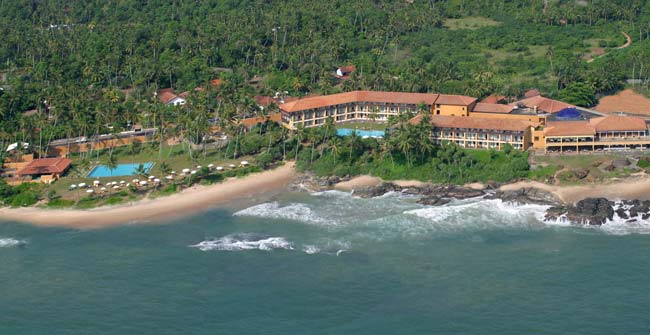
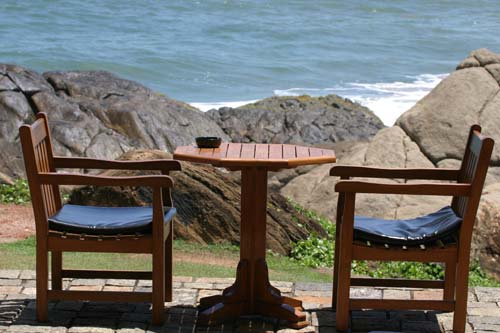
Sri Lanka is getting ready to host its first literary festival - The Galle Literary Festival and I've been invited. In fact, I've just received word from the Festival Director, the amazingly talented Libby Southwell that the picture you see on your left is going to be our abode in the second week of January. I'm not entirely sure if the property owners are ready to take on my son, who shot to notoreity with his Full Monty show at Ubud, but we sure are.


Given sights like these who can resist? That's only part of the reason that the Festival is already turning out to be such a huge draw.

In what can clearly be considered a literary coup, the festival has managed to attract this year's Man Booker Prize winner, Kiran Desai. And yours truly has been truly honoured to be given the opportunity to talk about her life and her impressive award-winning work.

Other big names include author and historian William Dalrymple who promises to take the audience on a dramatic journey as he unveils his enthusiasm for India’s last Mughal Emperor, Bahadur Shah Zafar with his recently launched book 'The Last Mughal'. The book's been getting rave reviews across the world, including one from the usually unforgiving 'Economist'. It's in the recent issue, if you must go looking for it.

Apart from Kiran Desai, I am looking forward to listening to ex-BBC India man and author Mark Tully. I've read most of his work and have been touched by it, particularly by the book that came out post Operation Bluestar that he co-authored with Satish Jacob. Steering the discussion will be none other than former ABC South Asia Correspondent Christopher Kremmer.

2005 Pulitzer Prize finalist Suketu Mehta will be joining the incredible line up of authors that include Sir Arthur C Clarke, Romesh Gunesekera and Madhur Jaffrey, among a host of others.

The festival will also celebrate Sri Lankan literature and will remember the late Nihal De Silva.

They say, there is nothing like the company of friends. And I will have plenty of that. Cooking up a storm at various sessions will be the charming Janet de Neefe, taking a break from airplanes will be the affable Elmo Jayawardena, and not stealing his ideas from kids this time will be the unparalleled Nury Vittachi. All fabulous friends who make for great company when they are not putting festivals together or appearing at them. Since the festival makes room for lunch or coffee with your favourite authors, I'd strongly recommend you look out for them, just as you do for the rest.

The four day programme will be filled with writing workshops, panel discussions, topical debates, literary lunches & dinners, poetry readings, cooking classes, theatre workshops, a children’s programme and much much more.

If that's got your appetite whetted, click on to the festival website:
www.galleliteraryfestival.com

The Festival will be held in & around the historic city of Galle and its magnificent UN World Heritage Fort.

As the official line goes, "It’s time to bury yourself in books for what promises to be an exceptional event."


I don't know about you, but one look at the stunning venues has my head brimming with ideas beyond the festival. More on that as and when it happens.

Pictures on this post courtesy 'The LightHouse' http://www.lighthousehotelandspa.com/index.html and 'The Sun House' http://www.thesunhouse.com/

Friday, September 15, 2006

THE BOOKER SHORTLIST


It's out! Someone please pass me the Kleenex! Claire Messud and David Mitchell are not on it! Ok, so 'Black Swan Green' wasn't entirely 'Cloud Atlas' - it wasn't meant to be right. Please tell me didn't anyone find the narration stirring? What about Messud's 'The Emperor's Children'? Sure, the story was about its simplicity itself. Isn't that what got it into the longlist in the first place?

The only saving grace for me was seeing two familiar names i.e. books I've read or am in the process of reading. Hisham Matar's 'In the Country of Men' and Kiran Desai's 'The Inheritance of Loss' have made the cut.

Whether or not they will remain the front runners is quite another story though.

As things stand now, Sarah Waters' 'The Night Watch' - a 1940s tale of heroism and love which narrowly missed out on this year's Orange prize - is tipped at 2-1. A close second is Edward St Aubyn with 'Mother's Milk' at 3-1. St Aubyn's novel is a sequel to his 1990s trilogy, 'Some Hope' that followed the fluctuating fortunes of the privileged, dysfunctional Melrose family.

While some critics and book sellers have dubbed it a "brave shortlist" with a focus on "talent for the future" I'd agree with the Guardian's literary editor, Claire Armitstead who had called the longlist "respectable but not startling".

If you haven't seen it already, here's what you should be reading, if you into the whole awards determine my reading thing:
Kiran Desai - The Inheritance of Loss (Hamish Hamilton)
Kate Grenville - The Secret River (Canongate)
M J Hyland - Carry Me Down (Canongate)
Hisham Matar - In the Country of Men (Viking)
Edward St Aubyn - Mother's Milk (Picador)
Sarah Waters - The Night Watch (Virago)


You have till October 10th to read and figure out, who you think should walk away with the US $94,000 award to be announced at yet another glittering ceremony in London.

Wednesday, August 16, 2006

THE BOOKER LONGLIST

Time to catch up on your reading, dudes and dames....
the 2006 Man Booker Long list is out.

Some usual suspects - Nadine Gordimer, Kate Grenville and Howard Jacobson.

Some names that simply had to be there - Sarah Waters, Peter Carey and David Mitchell.

Some welcome surprises as well - Kiran Desai, Naeem Murr and Hisham Matar.

The full list of 19 titles unfolds like thus:
Peter Carey's 'Theft: A Love Story' (Faber)
Kiran Desai's 'The Inheritance of Loss' (Hamish Hamilton)
Robert Edric's 'Gathering the Water' (Doubleday)
Nadine Gordimer's 'Get a Life' (Bloomsbury)
Kate Grenville's 'The Secret River' (Canongate)
M J Hyland's 'Carry Me Down' (Canongate)
Howard Jacobson's 'Kalooki Nights' (Jonathan Cape)
James Lasdun's 'Seven Lies' (Jonathan Cape)
Mary Lawson's 'The Other Side of the Bridge' (Chatto & Windus)
Jon McGregor's 'So Many Ways to Begin' (Bloomsbury)
Hisham Matar's 'In the Country of Men' (Viking)
Claire Messud's 'The Emperor's Children' (Picador)
David Mitchell's 'Black Swan Green' (Sceptre)
Naeem Murr's 'The Perfect Man' (William Heinemann)
Andrew O'Hagan's 'Be Near Me' (Faber)
James Robertson's 'The Testament of Gideon Mack' (Hamish Hamilton)
Edward St Aubyn's 'Mother's Milk' (Picador)
Barry Unsworth's 'The Ruby in her Navel' (Hamish Hamilton)
Sarah Waters' 'The Night Watch' (Virago)

The shortlist will be announced on 14th September and the winner on 10th October. Still plenty of time to book your bets - hopefully after having read the text.

Would be great to see which publisher got makes it to the finish this year round.

Thursday, October 11, 2007

MEET TULAI THOMSON

Literary festivals are great discovery zones, that much we all know.

That they help us engage great minds, that we know too. Depending on one's interests they set the pace, the direction for reading, writing and other such areas.

As a moderator does all of this excite me, I'm often asked? Of course, it does. I wouldn't be doing it, if I wasn't loving it so much.

Beyond all the conversations, the biggest joy of being at a lit fest is forging new friendships, finding out what the audience took back from the session and what they'd like to hear more/less of.

As a journalist I have that annoying propensity of keeping my ears glued to the ground, of listening to the chatter, of hanging out discreetly behind loo doors to find out what the women are making of the dishy author they just heard. Often it is these words that set the pace for the very next session.

And ever so often there are the readers, driven by an openness, by sheer passion for the written word. I've met so many of them across continents but I've yet to meet someone like Tulai Thomson.

He was there at Amandari for 'Out of India' with Kiran Desai and Shashi Tharoor waiting patiently to get his copy of Kiran's debut Hullabaloo in the Guava Orchard signed.

I was intrigued. He wasn't rushing in, when I said hello, he told me he'd enjoyed the session. But what drew him to the tale of Sampath Chawla is what I wanted to know.

"My mum has read it and she recommended it," he told me.
"Do you read everything your mother recommends," I probed further, thinking deep down if only I could get this strategy working on Aneesha.
"I try," Tulai said.

Then we did a quick run through some of the books he's read so far. Gosh! I hadn't even heard of half the names when I was his age. Having interviewed the super-achiever Shashi Tharoor, I was also wondering if Tharoor sounded like this when he was Tulai's age.

Many, many thoughts were playing in my head, as was the thought of getting Tulai on camera. A natural in front of it, he had the perfect soundbyte without having to think too hard about it.

In a flash he told me what he found most interesting about some of the discussions at the Ubud Writers Festival:
"I've been to a couple of sessions with other writers, most of them have been in my school. Most of them have been on writing techniques and how we should write. Here I've heard famous authors, just hearing how they express their feelings through their writing, I found that very inspirational."

What got him reading:
"My Mum has always encouraged me to read ever since I was young. Reading has always been a part of my life, I can't imagine life without reading. I like Roald Dahl a lot."

Did I mention he is barely 12?

Labels: ,

Tuesday, November 20, 2007

FRAGRANT RICE

The other night Janet and I ended up at the Pan Pacific Hotel. We were to pick up Kunal Basu. The minute we were there, I realised this was like a karma play. "It all started here, Janet," I said.

"Yeah, it seems like yesterday," she responded.

Pan Pacific it was. Almost three years ago. Over a cup of coffee that lingered too long. Words had already transformed Janet's life and they were destined to chart mine too. Little did I know. The next morning, I thought of so many things, our friendship, our early morning conversations and the interview that had started it all.

This was done some time ago, yet when I re-visited it, a lot of things Janet said then, still hold good. If you missed this year's Ubud Writers Festival, you can catch her at the upcoming Singapore Writers Festival. Among other discussions, two culinary greats will be sharing the stage at the festival. I'm talking about Madhur Jaffrey and Janet. Food is their shared passion and it shows in almost everything they touch.

Interestingly enough, while Madhur's culinary journey took off when she moved from Delhi to London, Janet's started after her move from Melbourne to Ubud. And it was love that drew her to Bali:

I first visited in 1974 and then when I went back in 1984, I met my husband on the second day and after that I was spending most of my time in Ubud. I was open to learning and found the culture and the people there fascinating. When you are willing and when you are younger, it’s a lot easier to adapt and adjust to something that seems tougher once you’re older.

How her book ‘Fragrant Rice’ happened:The book was originally meant to be a cookbook. That was my idea, that was my passion. I love Balinese food. But once I started living there, had my children, I started seeing this other side of life in Bali, the cultural aspects too. I started jotting down stories, details of the ceremonies – each of which had so much history behind them. I would talk about them in my cooking class and people would always ask – ‘are you writing a book?’ To which I’d respond, yes, I’m writing a cookbook. They’d all tell me that I needed to put in all the other stories in the book too. That’s how it started. The collection of recipes slowly transformed into this book about my life in Bali.

What she hopes to achieve through her book and on being crowned the ‘cultural ambassador of Bali’:
I feel uncomfortable about that. I don’t think I’m quite an ambassador, I’m only doing my bit to help people better understand and appreciate Balinese culture. If the book is helping in a small way, then I’m grateful for that. When I go back to Australia, people often tell me that they’ve almost always seen it as a beach resort. But it’s so much more than that.

On the Ubud Writers Festival:
The festival was born out of tragedy, sadly enough. There was a lot negative press that we got to see and read after the bombings. ‘Fragrant Rice’ was out, I was doing the rounds of literary festivals and I thought that literature and the written word is a way of understanding things and moving ahead. It’s just such a great connect. Also Ubud and the Balinese are known for their hospitality, so I thought why not enhance their own rich culture through something like a literary festival. We were also looking at something that would be targeted at young readers, aspiring writers who were hoping to meet authors they wouldn’t always get to meet. We were also very clear that Indonesian voices should always be heard at the festival. And we’ve tried our very best to get a diversity of voices at the festival. We’ve had writers like Michael Ondaatje, Amitav Ghosh, Kiran Desai share the stage with Ayu Utami, Luxmi Pamuntjak, Putu Wijaya, so its been a fascinating cross-cultural exchange.

For children, we’ve made the events fun. When you speak to writers you realize, something magical or special happened to them when they were children. That’s when they started reading and moved on to writing. We focus on children because in addition to being our future audience they are quite literally our future.

What she hopes people take back from her book:
I suppose I want to make people understand that different cultures have different ways of doing things. It doesn’t mean that one is better than the other. It’s important to not only understand but value those differences too. It’s important to appreciate, embrace and enjoy different ways of living. Living in a different culture has certainly made my life more exciting and has hopefully made me a better person – but I’ll leave that for others to decide.

Labels: , ,

Monday, December 03, 2007

THE RIGHT NOTES AT CROSSINGS

What a difference two years make. With a perfect setting, chambers rich in history, each seat inspires you. What would a journalist from The New Paper be thinking when he sat in the seat you are in. Would it have been a fiery debate? A debate that would spell out major changes, what were those words like? It's only fitting that 'The Chamber' at The Arts House should play host to some of the most stimulating exchanges of words. For it is when words cross, that ideas are formed and journeys defined.

I embarked on mine at The Singapore Writers Festival on Sunday. Over the past year, I've had the fortune of meeting the people who are scripting the action. Yvette, who hasn't a moment off since it all started. Michelle who has shown up all things literary. Yilyn who remains a picture of poise, never mind all the endless requests you continue making. Phan Mingyen, who'd rather discuss Michael Ondaatje than get down to eating that meal he sorely needs. When you see passion like that, you know you can hope for visions of grandness. And that's what I saw at the five things literary I engaged in.

Packed sessions. Yes, what authors and moderators love to see is - no standing room. And no standing room is what I saw as I flitted between several sessions. Oh, the choices, these lit fests force you to make.

Enormously enjoyed listening to Goh Poh Seng, who rightfully dismissed the moderators question of the dearth of the Singaporean novel: "There's too much pessimism," he rightly pointed out. "You can't rush a novel, you need time, perseverance and continuity," he added. Take a look around you, it took Kiran Desai 7 years to come out with her Booker award winning effort 'The Inheritance of Loss.' At the end the day, its the quality not the quantity that matters when it comes to the art of the novel. At the end of the day, what's the point of pushing shelves full of novels which will fail to find readers if they've been too rushed.

Equally impressive on that panel was Daren Shiau who was at ease speaking about his failure with the poetic form, his shift to short story and the writing of 'Heartland', which he admitted happened "almost by accident." It was an attempt to show, among other things, that the Heartland in Singapore was not an intellectual wasteland. The author himself would count as its finest product. A Fulbright scholar, he's a practising lawyer and his is a voice I'd suggest you hear more of.

Philip Jeyaretnam is known to pack the punches and he sure did as he spoke about writing being "an extension through which I could get into the heads of people who are very different from me." He called writing "a way to dream and dreaming was almost an act of resistance." It was thoughts like these and the stimulating exchange that followed that elevated 'Dreaming Singapore' to a top-notch panel discussion.

There was lots to learn from Booker longlisted novelist Tan Twan Eng, who is at ease doing the stuff he's doing. I still recall my first meeting with him, the pauses, the doubts about how the book would be received. Those doubts no longer exist. 'The Gift of Rain' has got the attention it deserves and its helped Twan the writer shape up as an eloquent speaker. Squeezed in two of his sessions and the note pad brims with thoughts:

- Getting from Point A to Point B wasn't planned. I can only suggest you absorb, assimilate and be open to ideas.
- When asked if his characters rebelled, he was quick to point out "they couldn't rebel because I was in charge of them."- On short stories: "I don't read short stories as I often don't understand their endings. From the start I knew I was going to write a novel and that was it."
- On life post Booker: "It feels the same but things are a lot easier for my publishers and agents. Their phone calls are returned."
- What sells: "Long books that read like short books sell well."

With that, the final word, "you have to write the right book at the right time." The only thing is not to wait for that moment, I guess.

Lots more lined up this weekend. A good place to start would be the literary tour that's got P C Abraham's stamp of approval. Take that man's word for it, he's done the rounds and his nod means a lot.

In between the walking and the talking also take a moment for Between Land and Sea: The Life and Times of Joseph Conrad: Polish writer Joseph Conrad lives again through this travelling exhibition curated by the Adam Mickiewicz Museum of Literature in Warsaw. The political writer's works, such as Under Western Eyes and The Secret Agent, remain as fresh as ever today, 150 years on.

The Singapore Writers Festival is happening at The Arts House, 1 Old Parliament Lane. It ends on 9th December.

Labels:

Sunday, March 04, 2007

NOT ALL LIT FESTS ARE EQUAL

For the longest time, Janet de Neefe and I did a 'shall we, shall we not' head to the Kitab Lit Fest in Bombay/Mumbai? Sure, we'd had our dose of the sub-continent at the Galle Lit Fest in January but Kitab sounded sorely tempting. That was till we learnt that Kiran Desai - whose mug stayed on the front page of the website for the longest time was not going there, nor was MJ Akbar, whose name appeared on another panel. Then another panel had one moderator and eight panelists - wonder what they said in the span of an hour. All of this meant - take your chances.

In this brilliant report, Jerry Pinto pens an intensely personal account of the festivities or lack thereof:

"In the morning, the discussion on the veil was equally arbitrary. Everyone spoke about veils. Except for Kamila Shamsie, no one made any sense. A feminist friend was startled by the complete arbitrariness of the remarks. “Did they come for a holiday?” she asked. "

Looks like we missed nothing.

Labels:

Thursday, December 14, 2006

THE ECONOMIST'S BOOKS OF THE YEAR

I'm usually suspect of lists, particularly those that attempt to set apart the best from the rest. But when such lists happen to be from The Economist, I do happen to sit up, read the fine print and take notice. Not that they always give me what I want.

Often a lot of South Asian writers are simply ignored. This year too, I was hoping to see Vikram Chandra's 'Sacred Games' somewhere on the list - it's not. Nor is Kiran Desai's Booker prize winning 'The Inheritance of Loss'. While one of my favourite reads of the year, Claire Messud's 'The Emperor's Children' makes the cut, Hisham Matar's stunning debut 'In The Country of Men' doesn't.

Apart from these literary heart-breaks it is encouraging to see James Kynge's 'China Shakes the World' and Edward Luce's 'In Spite of the Gods: The Rise of Modern India' get the mention they deserve in the 'Politics and Current Affairs' section.

The book that's caught my eye this time round is:
"Journey Through Great Britain
By Iqbal Ahmed. Coldstream; 190 pages; £9.95

A deceptively simple account of travels in Britain by a Kashmiri immigrant. It shows the British as others see them -not as they think they are."

Though several searches show the correct title of the book is 'Empire of the Mind: A Journey Through Great Britain'. A sequel to his first book 'Sorrows of the Moon', a moving investigation of the immigrant experience in London, Iqbal Ahmed moves beyond the capital to make a journey through the remnants of Britain’s imperial past in 'Empire of the Mind'. Ahmed who was born in Kashmir in 1968, has lived in London since 1994. His first book was chosen as a Book of the Year in The Guardian and The Independent on Sunday. He is currently working on a novel.

Read more about how a hotel doorman by night, turns into a writer of note by day here: http://www.thecnj.com/review/033006/books033006_01.html

So if lists determine your reading, you'd do well to head here before setting out for the nearest bookstore...
http://www.economist.com/books/displaystory.cfm?story_id=8380365&fsrc=nwlgafree

Labels:

Monday, March 05, 2007

SPOILT FOR CHOICE?

Too busy for all the festivities in March? Then block your diaries, calendars, gadgets or gizmos or whatever else you use to block dates for some other fine festivals.

In July, its Byron Bay, tons of coffee and stimulating conversations in wind-blown marquees.

In September, get ready for 'The Seen & Unseen' or 'Sekala Niskala' at the Ubud Writers Festival. Lots of vocal writers have confirmed their attendance. Let me assure you any festival that gets the likes of Catherine Lim and Shashi Tharoor has a lot to talk about. That's not all, they've also got nods from Mohsin Hamid, Kiran Desai, Peter Goldsworthy. More names are likely to follow, so keep watching their seen space.

In December, Singapore hosts its own festival. The website isn't out but it will be soon. Lots of exciting venues are being explored as I pen this. So here's as good an excuse as any to visit us, even if you don't want to be part of the legendary shopping extravaganzas.

Labels:

Tuesday, October 02, 2007

BACK N BATTLING

Sleep. Yes, I'm prone to a little craziness. Those of you who've known me long enough already know this. Which is why I find myself dreaming a little dream, thinking green, getting off a jet plane and heading straight to work. Tonight I will crash, maybe not burn. Ubud is still on my mind. Those conversations, those authors, those readers, that 11 year old. There are many, many, many stories playing in my head, as they always do. I don't blog when I'm on the road. I want to absorb it all. I want to talk to people. I want to see things around me, not indulge in the search for wireless connectivity. That's one of the many reasons why when I come back I'm loaded with posts - which for some readers is a good thing. It's a house divided, others would have liked to read it as it happened. I'll try my best, over the next couple of days to recount all that happened in the sessions I attended at the Ubud Writers and Readers Festival 2007. There was a lot. Most of my time was spent working on sessions I was moderating this year - a great mix, the writing workshop and then the conversations that started on a panel and continued till much later.

Christopher Merrill has said this before, in a different context, yet as I start the journey of re-tracing my steps at the fourth year of the festival, it's worth sharing this:
"Did I read every page of every book? Of course not. That would be impossible. But I read enough of each book to know whether it merited further consideration. And what I will remember of the judging process is the glee I felt each day at the sight of dozens of books piled on my doorstep, each an invitation to embark on a new journey. "I have traveled much, in Concord," Thoreau wrote. In these past months of reading, I traveled much, in America-an endlessly intriguing place."

We'd discussed this, among many other issues in the one-on-one with Merrill and one of the things we agreed on was that literary festivals are the best discovery zones. Ubud, the cultural centre of Bali makes that cross-cultural connect in a way no other place can. It's seeped in culture, the people are unbelievably nice, the settings are more than perfect, the mix of authors to die for. As a moderator, I come back each year, humbled by the knowledge that there is so much to be learnt, that people in so many parts of the world continue to battle with liberties that we take for granted. It may be an increasingly globalised world but our approaches will always differ.

Which is why, at the risk of repeating myself I credit the festival organisers again for coming up with such a superb mix of authors, of perspectives, of getting our worlds to meet, of ensuring that East meets West isn't a mere style statement. Sitting with authors like Somaya Ramadan, Richard Flanagan, Lee Hye-Kung, Debra Yatim, Adib Khan, Rosario Cruz Lucero, I realise there are no easy answers to even the most direct of questions.

What's even tougher is finding the right connect for authors of their stature. There are big names, there are established names, there are emerging names. Making panels that straddle the worlds of Shashi Tharoor, Kiran Desai, Peter Goldsworthy with other literary names is no easy feat. Yet, Festival Director Janet de Neefe together with Finley Smith and Karen McClellan has pulled it together to near perfection. They have had the support of the huge pool of volunteers, advisors and feedback has always mattered. I know that, I get to hear the good, bad and ugly sides of my modest abilities as a moderator.

Yet, it is the stimulating discussions, the level of debate and sometimes the strange and the sublime that leaves me pining for more. Then there is Ubud - a place of unmatched beauty. Honeymoon Guesthouse, which increasingly feels like a third home. I can't imagine being anywhere else but there. This time round, my camera failed me. Had been downloading pictures and forgot the memory stick back. Technology being technology, I rather painfully realised that the model I use for my camera is not being used anymore. Thank heavens for the N73 and thanks also to Bala's cousin, Anisha, whose superb photography skills show why you should be there too, if not this year, then the next. If you have more pictures to share, I'll be happy to do the posts. I'm only warming up, lots more in the days ahead.

For the moment though, let these be your inspiration.....


Labels:

Monday, January 01, 2007

MY BOOK OF THE YEAR

By now you have done your reading, read the lists, made your choices. Not that you need the critics for that. Reading is after all a personal pursuit. You might like crime fiction, I might detest it. You might like fantasy, I might like the real world. You might like chick lit, I might read only literary fiction. There you are, in the long drawn cycle of critics telling you what to read. More often that, the critic hasn't even read the book in any case. Or even if they have they haven't engaged with the book. Which is why, I try to tell everyone I meet, there's tons of good stuff out there, make your choices. It isn't that difficult to get yourself to a book store or even a library to decide and pick what you really want to read, not what others say you should be reading.

It's an entire universe out there. You can get lost in it, depending on which genre you choose. Most books are defined ever so often by genre, though once in a way you come across a book that defies definition, that merges styles, themes, takes you into a parallel universe with its evocative characters. This year, after tons of brilliant reads notably Hisham Matar's 'In The Country of Men', Peter Carey's 'Theft', Claire Messud's 'The Emperor's Children', Kiran Desai's 'The Inheritance of Loss' - towards the end of the year, the seven year wait for Vikram Chandra's 'Sacred Games' did it for me.

A short review on the relative merits of the book is here:
Http://www.todayonline.com/pda/162233ag.htm

Beyond what is mentioned here, it is passages like these, that have propelled it to my book of the year:

"War comes upon us. We are led in leaning curves towards the battlefield. You may try to avoid it, but find that last flower-lined turn you chose was really an entrance into a blood-soaked arena. So we were here. 'Good,' I said. 'Let's start.'

"And one of these sisters was Navneet, beloved and best of all, now lost for ever..... It was useless to remember. The histories had already been written, and what had happened, had happened.....There was no running away from life, and trying to wish away suffering only made it more present. She took a deep breath: bear it."

"There was a sloping river in the sky, a sinuous curve of light. There was the sky above, and us underneath..... Everything sits in pairs, in opposites, so brutal and so lovely."

And there's that bit on writers, that isn't going to win Chandra too many fawning fans. I'm not about to reveal that here, save the best for the read and take your time to fill in the dots for the text above.

Here's to another year of great reads.

Friday, April 13, 2007

A BOOKER BY ANY OTHER NAME

It's becoming increasingly tough to keep track of the Booker.

Nominees have just been announced for the Man Booker International Prize. Lest, you think what you are thinking, don't confuse this with the Man Booker Prize. The one that gave us our literary inheritance back by honouring Kiran Desai.

What's the difference, you may ask? Isn't a Man Booker or a Booker by any other name the prestigious literary award - the one that catapults books into bestsellers, makes the prize-winning authors the toast of the literatti and the gliteratti.

Subtle differences exist. If you were to read the fine print the Man Booker International Prize sets itself apart from its other famous predecessor by looking at work from fiction writers of any nationality. The only criteria - the work should be written in or translated into English. The 60,000-pound award is presented every two years to highlight a living writer's continued contribution to fiction on the world stage.

So what can you expect?

The names you've heard so many times before. That pretty much makes up for the 15 finalists. Among others there's Salman Rushdie sharing the long list with Margaret Atwood, Peter Carey, John Banville, Philip Roth, Alice Munro and Michael Ondaatje.

The inaugural prize in 2005 was awarded to Ismail Kadare, so could it be Carlos Fuentes this time round? Find out in early June. That's when the panel of judges make their pronouncements.

If you are into award-tracking, it isn't too long a wait for the Pulitzer Prize though. They will be announced on April 17th, with the awards ceremony slated for May 22nd. Yup, the award season has only just begun.

Labels: , ,

Sunday, March 04, 2007

KL & HK LIT FESTS


Closer home, two lit fests get underway this month. It never does rain.

The Kuala Lumpur Literary Festival celebrates the 'Nation at 50' and brings together the likes of Tash Aw (Harmony Silk Factory), Camilla Gibb (Sweetness in the Belly), Dina Zaman (I am Muslim) among a host of others from March 28th-30th. It's got the nod from star lit blogger - Sharon Bakar . That alone calls for attendance. Early birds have special discounts, so get set to click online here.

The Hong Kong Literary Festival has made more news for the sacking of their best known literary export - Nury Vittachi. I've appeared with and behind Nury at festivals all the way from Byron to Galle to Ubud and find it impossible that people find him hard to work with. The timing of this ill-timed move couldn't have been more inopportune coz now the minute you mention Hong Kong, the next thing you hear is 'Nury' and his ridiculous sacking.

That's a pity for the festival as they have, as always, got some great names. This year, the stellar lit cast includes Gore Vidal, John R Saul, Jan Morris, Amy Tan, Simon Winchester, Uzodinma Iweala and two of my favourites Kiran Desai and Pankaj Mishra. Also in attendance Baby Halder who is bound to charm with 'A Life Less Ordinary.'

The festival kicks off on the 12th of March and goes on all the way till the 21st. A fairly long drawn affair, if you like your festivals tightly packed. On the flip side, it does allow for various combinations of travel plans.

Labels:

Monday, January 22, 2007

GALLE LITERARY FESTIVAL


Back after a week in Sri Lanka. What a week it was. Between the spectacular Galle Literary Festival, we squeezed in day in Colombo, a day at Captain Elmo Jayawardena's River House in Moratuwa to visit AFLAC's 'Swim for Safety' project. And soaked in all things literary at the Galle Literary Festival. Making this one of those trips where you come back longing for more.

First things first. Since this trip happened largely due to the Galle Literary Festival let me get to that. It all seemed to come together with a chance meeting with the amazing Libby Southwell at the Ubud Writers Festival (strange how so many things invariably go back to Ubud!). I was lugging my cameras and my books after a long day of sessions when I bumped into Libby. One thing led to another. We spoke about many things - her book, her life and then the festival. When she mentioned in September that she was putting together a festival that was to take off in January - four months time - I had half a mind of choking on her drink. 'No way', I thought to myself, just as did a bunch of other writers and people in attendance.

Over the next couple of days, as Libby told us more about her life and started with her checklist of - accomodation (no problem), transport (no problem), writers (hmmm!) I knew the makings of a great literary festival were there.

So the critics (who are now hopefully chewing their own words) did their damaging bits in the run up to the festival. But after addressing all the issues at the opening press conference, the festival founder Geoffrey Dobbs and Libby ensured that it took on a pace of its own.

And it sure did. It was four action packed days of all things literary. It took us to 12 stunning locations. It brought 61 writers - both Sri Lankan and international names together.

For me it was yet another occasion to catch up with old friends like Janet de Neefe and Nury Vittachi. As Nury rightly said "we almost feel like family now." Yes, we truly do. We've collectively seen the trials, tribulations and of course the critics. Then there were writers we'd all met before - Romesh Gunesekera, Suketu Mehta, Christopher Kremmer, Madhur Jaffrey and Elmo.

As always, there was the process of learning about new names. Last year's Man Booker Prize winner Kiran Desai was a true revelation. If only every other author could remain as modest as her despite the laurels, meeting the writers could turn out to be quite another story. A full Q & A with her will be up soon.

Speaking of revelations, meeting Sri Lankan authors turned out to be quite another. I bought Ashok Ferrey's 'The Good Little Ceylonese Girl' after listening to the fantastic reading at Sun House http://www.thesunhouse.com/sunhouse.html and it hasn't disappointed. I got my induction into Dilmah's 'Lover's Leap' tea courtesy Manuka Wijesinghe who turned out to be a laugh a minute. Had the most entertaining van ride from Geoffrey Bawa's stunning estate Lunuganga http://www.lunuganga.net/lunuganga.html to our Galle abode 'The Lighthouse'. Our meetings may have been brief, but we knew this was a friendship meant to last. As a parting gift, I got a signed copy of Manuka's debut 'Monsoons and Potholes' - which happens to be next on my reading list.
I was also visibly impressed by Professor Emeritus Yasmine Gooneratne. She has penned 20 books, leads a busy life between Australia and Sri Lanka. Offers editorial services to budding authors and runs a residence for all creative people alike - The Pemberley House. She responded to each of my emails in great detail and I believe we had a truly fine session. I learnt so much from her, that her life and her writing merits another post.

All of this happened thanks also in part of the hospitality extended to us by 'The Lighthouse' - http://www.lighthousehotelandspa.com/. A special thanks is due to Gehan de Silva and Sanjiva who ensured we were truly at home.


If the setting is the story, Galle had just about everything to offer. Full marks to Geoffrey and Libby for ensuring that writers went out and explored every bit of the beauty in and around Galle. There were times when I wished I didn't have to drive out for an hour and risk getting lost. But when I take one look at the footage I've got I'm not complaining.

Putting it all together, in addition to the festival committee, were the volunteers who were their bright and cheerful selves from morning till late in the night. They ensured each festival day ended on a high note. Often it was their smiles that made my night.

In his closing speech, Geoffrey set all wagging tongues at rest by promising yet another spectacular festival next year. If you haven't already marked your calendar, you'd do well do it. The longlist is still in the works, but if the inaugural Galle Literary Festival was anything to go by, it's bound to be a week to remember.